Bedroom design and sleep environment
Inside Naturepedic Organic Mattresses: Materials, Layers, and Design Choices
An organic mattress is more than a label or a list of ingredients. Its layers determine how it cushions, supports, breathes, and feels over time. Understanding the construction behind a Naturepedic mattress—and the questions to ask when comparing models—can make a consequential purchase easier to approach.
Published November 7, 2026
A mattress is a quiet piece of engineering. Beneath the cover, a sequence of materials works to soften pressure, hold the body, manage heat and moisture, and keep the sleeping surface stable. Those materials may be natural, synthetic, or a combination; they may be arranged in layers or integrated into a single structure. Their names matter, but so do their thickness, density, arrangement, and interaction.
That is the useful starting point for exploring Naturepedic organic mattresses. The brand’s offerings should be assessed model by model rather than treated as one uniform construction. A particular mattress may use different comfort materials, support systems, firmness options, or certifications from another model in the same range. Product specifications can also change, so current model descriptions and labels are the best source for exact details.
This guide looks at the questions that make those specifications meaningful: What does each layer do? How might construction relate to sleeping position and firmness preference? What can organic claims and certifications tell you—and what can they not? The goal is not to declare one mattress universally superior. It is to give readers a clear framework for weighing materials and design choices against their own needs.
A mattress is a system, not a single material
Many mattresses can be understood as a set of functional zones, even when their construction differs. The upper surface provides the first impression: it can feel cushioned, buoyant, smooth, firm, or springy. Below it, comfort layers help distribute pressure. A deeper support core helps maintain the mattress’s shape and provide a stable foundation. A cover encloses the assembly and contributes to the hand-feel and durability of the surface.
These parts influence one another. A soft upper layer over a firm core may create a different experience from a firmer surface over a similarly supportive base. A thick comfort layer can make the initial feel more enveloping, while a responsive material may allow easier movement and a quicker return to shape. The same named material can also behave differently depending on its density, processing, thickness, and position in the mattress.
For that reason, a short feature list rarely tells the whole story. “Organic cotton,” “latex,” or “innerspring” describes a material or structure, not the complete sensation of lying on a particular mattress. The more useful questions are how much of each material is present, where it sits, what supports it, and how the finished design is intended to feel.
The comfort layer: the first contact with the design
The comfort layer sits near the top of a mattress and plays a substantial role in surface feel. It can soften contact at pressure points, smooth the transition to the support system, and influence how readily the mattress adapts to a sleeper’s shape. Some mattresses use one main comfort layer; others stack several materials to create a more gradual change from plush surface to firmer base.
In organic mattress construction, shoppers may encounter materials such as latex, cotton, and wool, depending on the model. Each has characteristics worth considering, but none should be treated as a guarantee of a specific comfort outcome. Latex is often described as resilient and responsive; the exact feel depends on its formulation and firmness. Cotton can contribute a familiar textile feel and may appear in a quilted surface or other component. Wool is used in some mattress designs for cushioning, loft, or as part of a flame-resistant construction. The role and placement should be confirmed in the current specifications.
Thickness matters. A relatively thin comfort layer can provide a closer, firmer feel, while a thicker layer may allow more initial compression. But thickness alone is not a firmness rating: the material’s qualities and the layers beneath it also count. Two mattresses with similarly sized comfort layers can feel noticeably different when their materials or support systems differ.
When reviewing a Naturepedic model, look for an explanation of the complete surface assembly rather than relying on a single material headline. Is the comfort layer quilted into the cover? Is it a separate layer? Does the manufacturer list its material and thickness? Does the design have one feel across the surface, or are there distinct firmness options? These details help turn broad claims into a useful comparison.
Support beneath the surface
The support system is the mattress’s structural heart. It helps keep the body from sinking unevenly and provides a foundation for the comfort layers above it. In different mattress designs, support can come from a spring unit, latex layers, or another specified structure. The construction affects the mattress’s response, movement, and overall sense of stability.
Support and firmness are related, but they are not interchangeable. Firmness usually describes the perceived surface feel; support concerns how the mattress holds the body. A mattress can feel soft at first contact and still provide a stable foundation, or feel firm without being a good match for a particular sleeper. Perception also varies with body shape, sleeping position, and personal preference.
Spring systems may be designed to respond to pressure in different ways, and their configuration can affect how movement travels across the bed. A latex support layer has a different kind of responsiveness. Rather than assuming one system is inherently better, consider how each design aligns with your priorities: ease of movement, a closer or more buoyant feel, reduced motion disturbance, or a particular edge experience. Ask for the specific construction details rather than inferring them from the word “organic.”
The best support is not an abstract ideal; it is support that feels appropriate to the person using the mattress. If you share a bed, the needs of both sleepers count. Some mattresses offer different firmness choices on each side in selected sizes, but availability is model-specific. Verify whether a split configuration is actually offered before building it into your decision.
Materials and the meaning of “organic”
Organic is an important but incomplete description. It may refer to a specific component, a material’s certified status, or a defined portion of a product. It does not, by itself, tell you how the mattress feels, how long it will last, or whether every material in its construction is organic. A careful comparison looks beyond the headline to the documentation for the finished product and its individual components.
Certifications can help make certain claims more legible. Different programs assess different things, and a certification for a fiber or raw material is not necessarily the same as certification of an entire mattress. Read the scope: which component is covered, what standard applies, and whether the certification is current? If a claim is important to your choice, ask the manufacturer or retailer for the relevant certificate or product-specific details.
Material transparency is also a practical matter. A detailed product specification should identify the main layers and describe their role. It should provide enough information to compare models without asking shoppers to decode vague phrases such as “natural comfort” or “clean materials.” If a specification does not identify a component clearly, that is a reasonable subject for a direct question.
There is no need to turn material selection into a purity test. Some shoppers prioritize certified organic fibers; others focus on a particular feel, durability, maintenance, or budget. The right decision depends on which criteria matter most to you and what the documentation actually supports. A mattress can be evaluated thoughtfully without assuming that one label answers every question.
Firmness, sleeping position, and the fit question
Sleeping position offers a helpful starting point, not a rigid rule. Side sleepers often pay close attention to how a mattress accommodates the shoulders and hips. Back sleepers may focus on a balanced surface that feels supportive without excessive pressure. Stomach sleepers commonly prefer a surface that does not allow too much sinking. These are broad tendencies, not prescriptions: comfort, body proportions, and individual needs vary.
Firmness labels are not perfectly standardized across brands. A “medium” in one range may not feel identical to a “medium” elsewhere, and even the same mattress may feel different to two people. Whenever possible, try the mattress in person or understand the home-trial and return terms before ordering. If testing in a showroom, spend enough time in your usual position to notice whether your body feels comfortable rather than judging by a quick sit on the edge.
For a shared bed, discuss preferences before choosing. One person may want a plusher surface while the other prefers more resistance. Check whether a model can be configured with different firmness on each side, and note any size limitations, exchange rules, or setup requirements. Do not assume that a customizable feature available in one mattress applies to every product in the brand’s range.
A useful decision is specific: “I want a responsive surface with moderate cushioning,” or “I need a firmer feel and want to minimize sink.” That is more actionable than simply asking for the best mattress. Matching a clear preference to construction details can narrow the field without pretending that a single design suits everyone.
Heat, moisture, and the bedroom around the mattress
Temperature comfort is shaped by more than mattress materials. Room temperature, humidity, sleepwear, sheets, blankets, and a person’s own heat sensitivity all contribute. A breathable layer may be one part of a comfortable setup, but no material can ensure that every sleeper will feel cool. If overheating is a concern, consider the whole sleep environment and compare the mattress’s actual construction rather than relying on broad cooling language.
Sheets and covers matter because they are the surfaces closest to the body. Weave, fiber, and fabric weight can change the feel of the bed and how air and moisture move around it. A mattress that seems too warm under a heavy, insulating bedding ensemble may feel different with lighter, more breathable sheets. Small adjustments to the room and textiles can sometimes be easier than replacing the mattress.
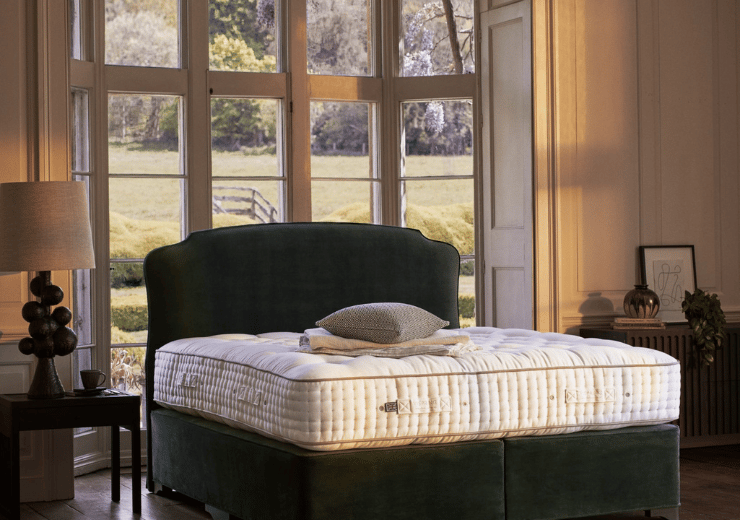
Keep the bedroom itself in view: ventilation, direct sunlight, and a comfortable ambient temperature all play a part. A mattress is one component of a sleep environment, not a substitute for every other design choice. This is especially relevant for an informational approach to bedroom design: good sleep comfort often comes from coordinating the room, bed base, mattress, and bedding rather than treating each as an isolated purchase.
Care, foundations, and the life of the mattress
Before buying, check the care instructions and foundation requirements for the exact model. A mattress may require a particular type of base or a specific spacing between slats. Using an incompatible foundation can affect stability and may complicate a warranty claim. If you plan to use an adjustable base, confirm compatibility in the product documentation rather than assuming that all constructions can bend safely.
Care guidance can differ by material and design. Some covers are removable, while others are intended for spot cleaning only. A removable cover is not automatically machine washable, and a mattress should not be washed as a whole. Follow the manufacturer’s directions for cleaning, airing, rotation, and protection. A mattress protector can help guard against spills and wear, but its fabric and fit may also change the feel of the surface.
Warranty terms deserve a close reading. The length of a warranty is only one piece of the picture; exclusions, required foundations, definitions of defects, and proof-of-purchase rules matter too. Separate the warranty from a sleep trial or comfort exchange policy. Those are different provisions, and they may have different deadlines, fees, or conditions.
For an online purchase, establish the practical details in advance: delivery access, setup, removal of an existing mattress, return logistics, and any costs not included in the initial price. These considerations are not as evocative as organic fibers or carefully arranged layers, but they can shape the experience of owning a mattress just as decisively.
A useful comparison: layer choices in a latex mattress
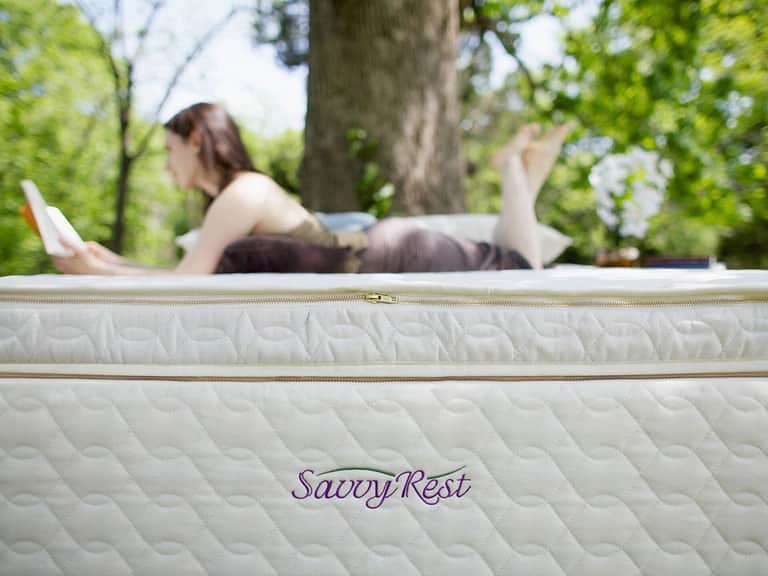
One way to understand customizable construction is to compare it with a mattress that makes its layer choices explicit. The Savvy Rest Unity Pillowtop Latex Mattress is described as a 13-inch design combining three layers in a Serenity mattress with an additional, separate latex topper. Its listed construction includes certified organic cotton in the outer casing, Dunlop latex layers, and wool used as a flame barrier. The available layer firmness choices and configuration should be confirmed for the size being considered.
This is not a Naturepedic mattress, and it should not be read as a substitute for reviewing Naturepedic’s own specifications. It is a relevant example of why layer arrangement and customization deserve attention. A separate upper layer can create a different surface feel from a simpler stack, while choosing firmness for individual layers can influence the finished result. The comparison is about construction questions, not a claim that two brands use the same materials or design.
When considering any layered mattress, ask whether the layers can be rearranged or exchanged, whether that option applies after purchase, and what the process costs. Also ask whether the outer cover is removable, how it should be cleaned, and what foundation the mattress requires. These details help distinguish a genuinely adjustable design from a construction that is simply described as layered.
A practical checklist for comparing Naturepedic models
Start with your non-negotiables, then compare models using the same questions. A short, consistent checklist prevents a striking material claim or a persuasive firmness label from becoming the entire decision.
- Construction: What are the comfort layers and support system, and how are they arranged?
- Materials: Which materials are used in each component, and are their quantities or thicknesses listed?
- Certifications: What is certified, under which standard, and does the documentation apply to the component or finished mattress?
- Feel: What firmness options exist, and can you try the model or return it under clear terms?
- Fit: How does the design relate to your sleeping position, pressure preferences, and any shared-bed needs?
- Care: Are the cover and mattress spot-clean only, removable, or subject to other specific instructions?
- Compatibility: Which foundations are supported, and is an adjustable base permitted?
- Ownership: What do the warranty, trial, delivery, setup, and return policies actually cover?
Write down the answers for each model. If a detail is missing, ask for it in writing before purchase. Product pages may summarize complex construction, and model names can be similar even when the underlying specifications differ. A current, product-specific answer is more valuable than a general statement about a brand or material category.
The quieter art of choosing well
A mattress decision is often presented as a contest of claims: more natural, more advanced, more supportive, more luxurious. The more useful approach is quieter. Identify what matters to you, understand how the layers contribute to the feel, and verify the details that affect comfort and care. Organic materials may be a meaningful priority, but they are one part of a larger design.
Naturepedic’s range should be considered through the specifications of each individual model. Compare the comfort layers, support construction, material disclosures, certifications, firmness choices, and ownership policies side by side. Then place those facts against the realities of your bedroom and the way you sleep. There is no universal mattress answer; there is a more informed way to find a fit.
In the end, the most sophisticated sleep environment is not necessarily the one with the longest list of features. It is the one whose mattress, bedding, room temperature, and layout work together in a way that feels calm and sustainable for the people who use it. A careful look beneath the surface is a good place to begin.